Thursday, November 11, 2010

Tagging in Iceland

A couple of weeks ago I was in Iceland to run another RFID project. The contect was the same as this project. This time we had more tools available, like handheld RFID scanners with embedded software to compose XML for upload to the project EPCIS.


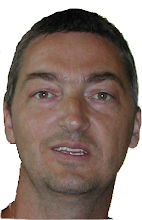
In the previous project we attached the RFID tags directly to the fish boxes, but this time we tried a different approach. The fish was stored on ice in big tubs. These were stored in a cold store, and they were wet. So instead of trying to get a piece of surface that we could fasten the tag, we attached them to handles in the corners of the tubs with the help of some extra paper tags. So here you see me, dressed up according to the rules of the processing company, giving a tub of Sebastes marinus identity.


These paper tags proved to be very convenient. As the project progressed we could take them off, make notes and so on. Of course, had the use of RFID been integrated into the production, then everything would be automatic. But this was a pilot in a type of chain that is not among the first movers. So we had to do a lot of manual operations, and then we could make notes on the tags that helped us fill in the holes in the traceability model later on.

To cover the different roles of traced items we employed both SGTIN and GRAI type RFID tags. The finished products, that were airlifted to markets in mainland Europe, were equipped with SGTINs, while the tubs with fish and similar vessels that were being used in the productions, were equipped with GRAIs. This way the proper XML can decommission the tags, so that they can be reused later without being related traceability-wise to earlier uses.

Friday, November 5, 2010

Lutefisk is upon us


Before I travelled to Iceland for the last week in October my wife served me lutefisk for dinner. As you can see from the picture I have helped myself to potatoes, mustard, mashed peas and bacon, in addition to the fish. It is simply so good. I may be disgusted by all the Christmas decorations appearing at the same time, but lutefisk is simply too good to be missed.

To our surprise even the kids liked it. Maybe we have gotten better at preparing fish meals, or maybe it has something to do with them growing up. Anyway, serving them fish based meals seem to have changed from a duty to a pleasure. Lets hope it stays that way.

Wednesday, November 3, 2010

Cowberry chocolate from Finland


On a visit to a tax free store on a recent trip I discovered that Fazer, the Finnish confectionery company, has sweets based on lingonberry, or cowberry as you and I like to call these jevels from the forrest. I had to buy and taste.

As you may suspect - I have tried to make something similar myself. Last year I was inspired by a TV program showing the process, and I ended up trying myself. Compared to the ones made by Fazer I prefer my own. But I am not very good at industrializing this type of production, so I guess my price per piece is much higher than Fazer's alternative.

Well, the ones I made last year ended up as Christmas presents. And I plan to to the same this year. So stay tuned for more!!!!!

Saturday, October 23, 2010

Hoe - hoe - hoe


Christmas is comming close! But this hoe is something different. In Norwegian it is called "krafse" and the tray under it is a "krafsebrett", i.e. a hoetray. Both of them are invaluable to a garden owner. The picture is from the other day when I was spreading a truckload of gravel in my driveway and other places around the house.

Too bad I agreed to share the gravel with one of my neighbours, since I discovered that I could have spent it all myself.

How fresh is the fish? - revisited


I gave a talk called How fresh is the fish? once. It didn't actually answer the question.

However, things have moved forward. Of course, an experienced fish buyer can judge the freshness of a fish by looking at it, feeling it and so on. But there are other sources of relevant information. For example, the Matis research institute in Iceland has made findings of "undesirable substances" available online. Another, similar resource is Mareano, run by the Norwegian Institute of Marine Research.

Of course, fish moves around in the oceans, but if the fish we buy carried information about where it was caught, we consumers could look up what to expect in terms of harmful chemicals etc. But that wouldn't keep industry from polluting, would it?

Friday, October 15, 2010

The rain in Croatia stays mainly in Dalmatia


Have you ever seen? After a week of sailing in Croatia we had a night in the city of Trogir late in September. A heavy rainstorm happened to be visiting at the same time. From what I heard from the locals they weren't used to such intense rain.

I got thoroughly soaked in the narrow streets. The city was from long before cars etc. so the streets could just about let two people pass each other. When the water came flooding off the roofs, the streets turned into rivers, and there I was.

It all ended with a case of Bronchitis after comming home.

Wednesday, September 29, 2010

Nordens ark


Nordens Ark near Gothenburg in Sweden is worth a visit. It is a non-profit organization aiming at improving the situation for endagerede animals through breeding and reintroduction programmes.

I went there with kids and wife and we had a fantastic day. Imagine the satisfaction of being rewarded for patience with the view of animals like this snow leopard.

Lets hope the next time is in the wild, and that it doesn't see me!

Followers